Do I Need a Website If All My Clients Come From Referrals?
Jamie Windell
ProjectOne
|
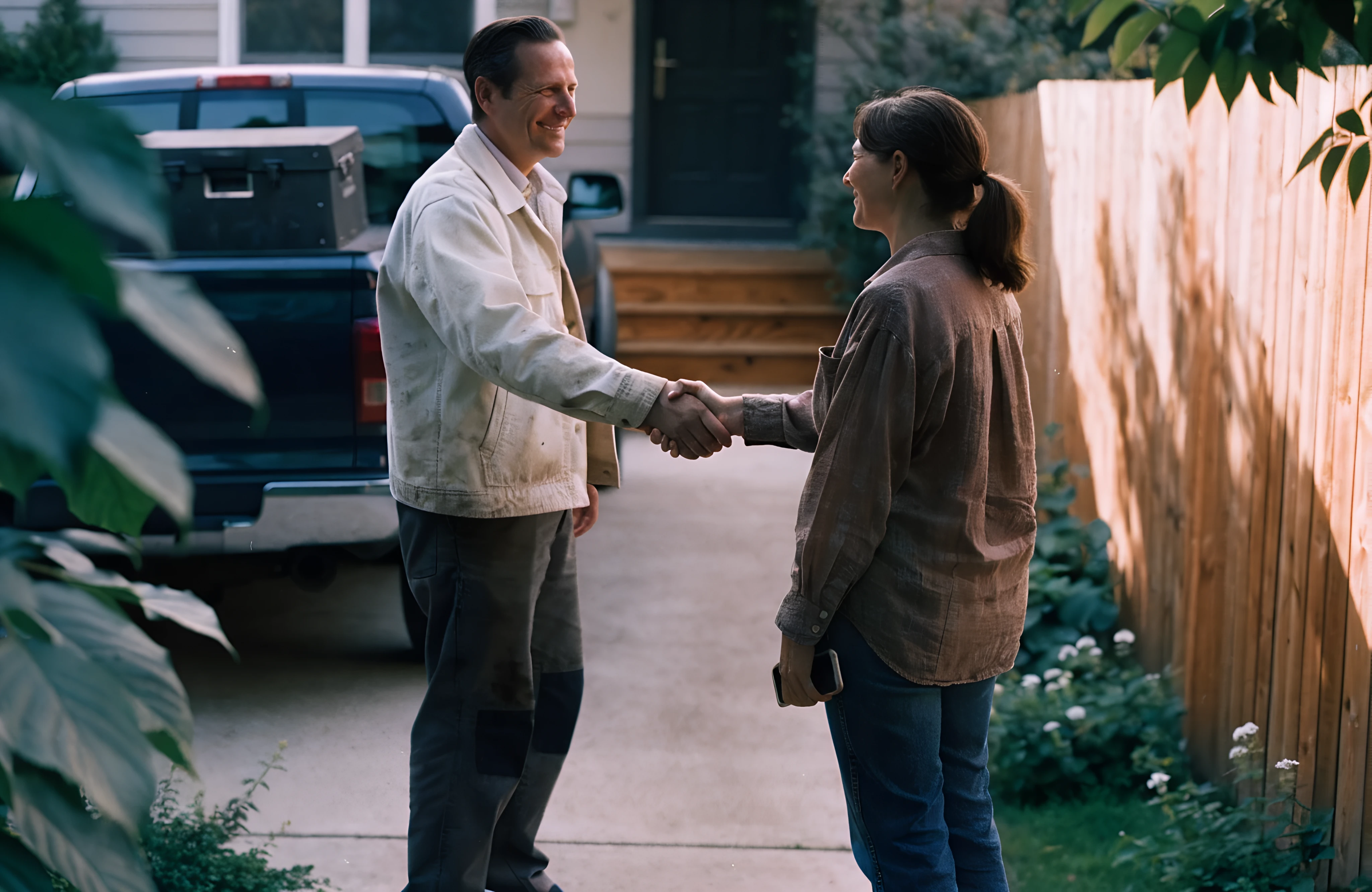
ONE REFERRAL. ONE GOOGLE SEARCH.
Do I need a website if I get referrals? Yes, and probably more than most businesses do. Almost every referred client looks you up before they reach out, so your website is the thing that turns a friend's recommendation into an actual phone call instead of a quiet "maybe later."
Word of mouth gets people to your door. Your website decides whether they knock.
Why does everyone keep asking me if I have a website?
Because they want to say yes to you. They just need a little proof first.
If your business runs on word of mouth, you already know how it goes. A past client raves about you at a barbecue. Their neighbour asks for your name. And then... sometimes they call. Sometimes they don't. You never find out which.
That's the bit that stings. Word of mouth has always worked for you. But there's a nagging voice that says, "I'm pretty sure I'm losing people I never hear about."
You're probably right. And it's not because your work isn't good enough. It's because the referral has one more step to survive before it becomes a booking, and right now that step is out of your hands.
Do referred clients actually look you up online?
Almost always. Think of the last time someone recommended a plumber, an accountant or a photographer to you. Did you call the number straight away? Or did you Google the name first?
Most of us do the quick check. It takes about thirty seconds and happens on a phone, usually while doing something else. The referred client is asking a few simple questions:
- Is this business real and still operating?
- Do they actually do the thing I need?
- Do they look like they'd do it well?
- Roughly what will it cost, or at least what's it like to work with them?
- How do I get in touch without making it awkward?
A referral gives you a head start on trust. It doesn't finish the job. Your friend's recommendation says "they're good." Your website says "here's why, and here's how to book."
If the search turns up nothing, the client has to do extra work to reach you. If it turns up a dusty Facebook page from 2019 or a website that looks nothing like the quality your friend described, doubt creeps in. Either way, the referral cools off quietly. No one emails you to say, "I was going to hire you, but your site put me off." They just move on.
Why is word of mouth marketing leaking clients now?
Word of mouth marketing hasn't stopped working. The path around it has changed.
A few things are working against referral businesses at the same time:
Everyone compares, even when they don't mean to.
When someone searches your name, they often see a competitor or two in the results as well. If those businesses have a clear, modern site and you don't, the comparison happens whether you like it or not.
People are cautious about who they let into their home or their books.
Trades, bookkeepers, consultants and wellness practitioners all ask for a fair amount of trust. A referred client wants reassurance that you're legitimate before they hand over their keys, their finances or their Tuesday afternoon.
AI search is now part of the check.
More people ask ChatGPT or Google's AI answers "is this business any good?" or "who does kitchen renovations near me?" Those tools pull from websites. If you don't have one, there's very little for them to say about you. We cover this in more depth in why your business isn't showing up on Google (or ChatGPT).
What is a missing website actually costing a referral business?
The cost is invisible. You can't count the calls you never got. But you can estimate them.
Say you're a contractor, and each job is worth a few thousand dollars. If even one or two referred clients a year quietly drift to someone else because they couldn't find you or weren't convinced, that's real money. Often far more than a website would cost over the same stretch.
And the cost isn't only lost jobs. There are a few sneakier ones:
The wrong clients get through.
Without a site that explains what you do and who you're for, you spend time on calls with people who were never a fit. Tyre kickers, price shoppers and folks who needed a totally different service.
You're capped by who you already know.
A pure referral business can only grow as fast as your network talks. That's lovely until it slows down, and it always slows down at some point.
If you've ever sent someone to your Instagram bio and hoped for the best, you're not alone. We wrote a whole piece on how to get clients without relying on Instagram, because social profiles are rented land. A website is the one thing you own.
Is a website necessary if I'm fully booked?
Because being fully booked today doesn't guarantee being fully booked next year. Referral networks are brilliant, but they're also fragile. A key client moves away. A builder who sends you work retires. The local economy has a slow patch. Suddenly the phone is quieter, and that's a stressful time to start building a website from scratch.
A website also lets busy businesses be choosier: attract the jobs you actually want and filter out the ones that aren't a fit. Full calendars are great. Full calendars of your favourite kind of work are better.
Think of it as insurance for your reputation. You built that reputation over years. A small business website protects it and makes sure it's working even on the days you aren't.
What does a referred client need to see on your website?
Good news: not much. A referral business doesn't need a sprawling 20-page site. It needs one clear page that confirms what your referrer already said. Here's a simple checklist.
- A headline that says exactly what you do and who you do it for, in plain words
- Where you work, so locals know you cover their area
- Your core services, briefly explained
- A few photos of real work, or of you, so people can put a face to the name
- Reviews or testimonials, ideally from clients like the one reading
- A short "how it works" so people know what happens after they reach out
- One obvious way to get in touch, like a booking button, a phone number or a simple form
- Fast loading on mobile, where the quick check happens
That's it. If a referred client can tick those boxes in thirty seconds, the referral survives. For a deeper look at why a single focused page often beats a big complicated site, read why your service-based business needs one website that actually works.
What's the bare minimum website for a small business?
The bare minimum is a single page that answers who you are, what you do, where you do it, why people trust you and how to get in touch. Anything less and you're asking visitors to guess. Anything much more, for most founder-led businesses, is optional.
What it is not: a free template with placeholder text, or a page untouched since you changed your phone number. An outdated site can do more harm than no site, because it hints the business might not be around anymore.
If you already have a site but you wince a little every time you share the link, that's worth fixing too. Plenty of great businesses have a site that undersells them. It's fixable.
Can a website help you get more referrals?
Yes, and this is where it gets fun. A good website doesn't just protect referrals. It creates more of them.
It makes you easy to recommend.
"Check out their website" is a much easier thing to text than a phone number and a long explanation. Give your fans a link and they'll share it.
It shows up when people search for your service, not just your name.
With SEO and AEO basics in place, your site can appear for searches like "bookkeeper in Kelowna" or "garden design Auckland." That's new people who've never heard of you, finding you anyway.
Should I build it myself, hire a freelancer or go to an agency?
Once you've decided you need a site, the next question is who builds it. Here's a quick, honest comparison, based on what most founders run into.
DIY.
Done "if you find the time," which for a busy referral business usually means never. Costs you time and sanity, you're limited to templates, and copy and hosting are all on you. There's no refund on lost weekends.
Freelancer.
Usually 4 to 12 weeks and around $3k to $8k upfront. Custom design depends on who you hire, copy and hosting are rarely included, and a guarantee is rare.
Agency.
Often 3 to 6+ months and $10k to $30k+ upfront. Custom design, yes, but copy and hosting are almost always extra, and a guarantee is rare.
ProjectOne.
Live in about 14 working days, $100 USD a month, always custom, with copywriting and hosting included and a 100% money-back guarantee.
If you're weighing those options in more detail, our breakdown of freelancer vs agency vs DIY goes deeper, and what a small business website should cost puts real numbers on it.
How does ProjectOne help a referral business?
We built ProjectOne for exactly this kind of founder. You're busy doing the work. Your clients love you. You just need ONE site that backs up what they're already saying about you, without it turning into a second job.
Here's how it works:
Custom, not a template.
Every site is designed from scratch around your business. Only the process is consistent. The design is 100% human-made.
We write the words.
You fill in an onboarding form, and we handle the copy. AI helps us draft using the StoryBrand framework, and then a senior copywriter edits and refines it so it sounds like you, not a robot.
A two-week sprint.
Around 14 working days from start to live site: Onboarding, We Build, First Look, Revisions, Framer Development, Launch. Sprints are booked at least three weeks ahead, so you can pick a stretch when you're able to reply to emails.
One focused revision round.
At First Look, you get two to three days to send all your feedback at once. We action it in one pass. No endless back and forth.
Built on Framer.
Framer is fast, design-first and easy to update, which matters when a referred client is checking you out on their phone between jobs. SEO and AEO fundamentals like page titles, meta, schema and llms.txt come built in, so Google and AI search tools can actually understand what you do.
ONE simple price.
The 24 plan is $100 USD a month for 24 months, with hosting included the whole time. No lump sum, no upfront charge. If you'd prefer a shorter term, the 12 plan is $199 USD a month for 12 months. See the details on our pricing section.
At the end of your plan, it's your call.
Take ownership and we'll transfer the site to your own Framer account, no questions asked. Or renew, and we'll redesign and build a fresh site from scratch.
And one more thing we're proud of: $100 from every site we launch goes to Hungry For Life, a 100% model charity funding clean water, food and shelter.
ProjectOne is a sub-brand of KHULA Studio, an award-winning design studio founded by Jamie Windell. We've picked up 16 prestige design awards, launched 100+ custom sites and spent more than 10,000 hours QA-ing and analysing websites. We're based in Chilliwack, BC, Canada, and we work with founders all over the United States, the United Kingdom, Australia, New Zealand and Canada.
FAQs
Do I need a website if I get referrals?
Yes. Most referred clients search your name before they contact you. A clear website confirms what your referrer said, shows your work and makes getting in touch easy. Without one, some referrals quietly go cold, and you'll never know they were coming. A simple one-page site is often all you need.
Is a website necessary if I'm fully booked?
It's still worth having. Referral networks can slow down without warning, and building a site in a quiet patch is stressful. A website also lets a busy business be choosier, attracting the work you want and filtering out poor fits. It protects the reputation you've spent years building, even when you're flat out.
What's the bare minimum website for a small business?
One page that explains what you do, who it's for, where you work, why people trust you and how to get in touch. Add real photos, a few testimonials and one obvious contact button. It should load quickly on mobile, since that's where most people do their quick check.
How do I get more referrals from my website?
Make your site easy to share. Feature testimonials, put your link on invoices and email signatures, and send it in a thank-you email after each job. Add a line inviting clients to refer friends. With SEO basics and a Google Business Profile, your site can also reach people who haven't heard of you yet.
What if I don't have photos or content ready?
You don't need to prepare anything. We write your copy from the answers in your onboarding form. For photos, we can use your existing assets, handpicked stock images, or arrange a custom shoot if you're local to BC. You bring the business knowledge, and we handle the rest of the heavy lifting.
Is it really monthly, or do I pay anything upfront?
It's truly monthly. You pay equal instalments over your plan term, with hosting included, and there's no lump sum or upfront charge. At the end of the term you can refresh your site and keep going, or take ownership and pay Framer for hosting directly, which is around $10 USD a month billed annually.
What's the guarantee?
If you're not happy with the design direction at the First Look stage, you get a full 100% refund. No questions, no hard feelings. It's there so you can say yes without worrying about getting stuck with a site you don't love, which is a risk most freelancers and agencies won't take on.
Ready to protect every referral you've earned?
So, do I need a website if I get referrals? If you want to keep every one of them, yes. Your clients are already doing the hard part: telling people how good you are. Let's make sure the people they send your way find something that backs them up. No pressure, no hard sell. Just a clear next step whenever you're ready.
✅ 100% Money-Back Guarantee.
Your referrals did the talking. Now let ONE site close the deal.
one plan. one site. done right
Your Site Won’t Build Itself. Good Thing We Will.
Ready for a design partner that makes it simple?
