How to Get Clients Without Relying on Instagram
Jamie Windell
ProjectOne
|
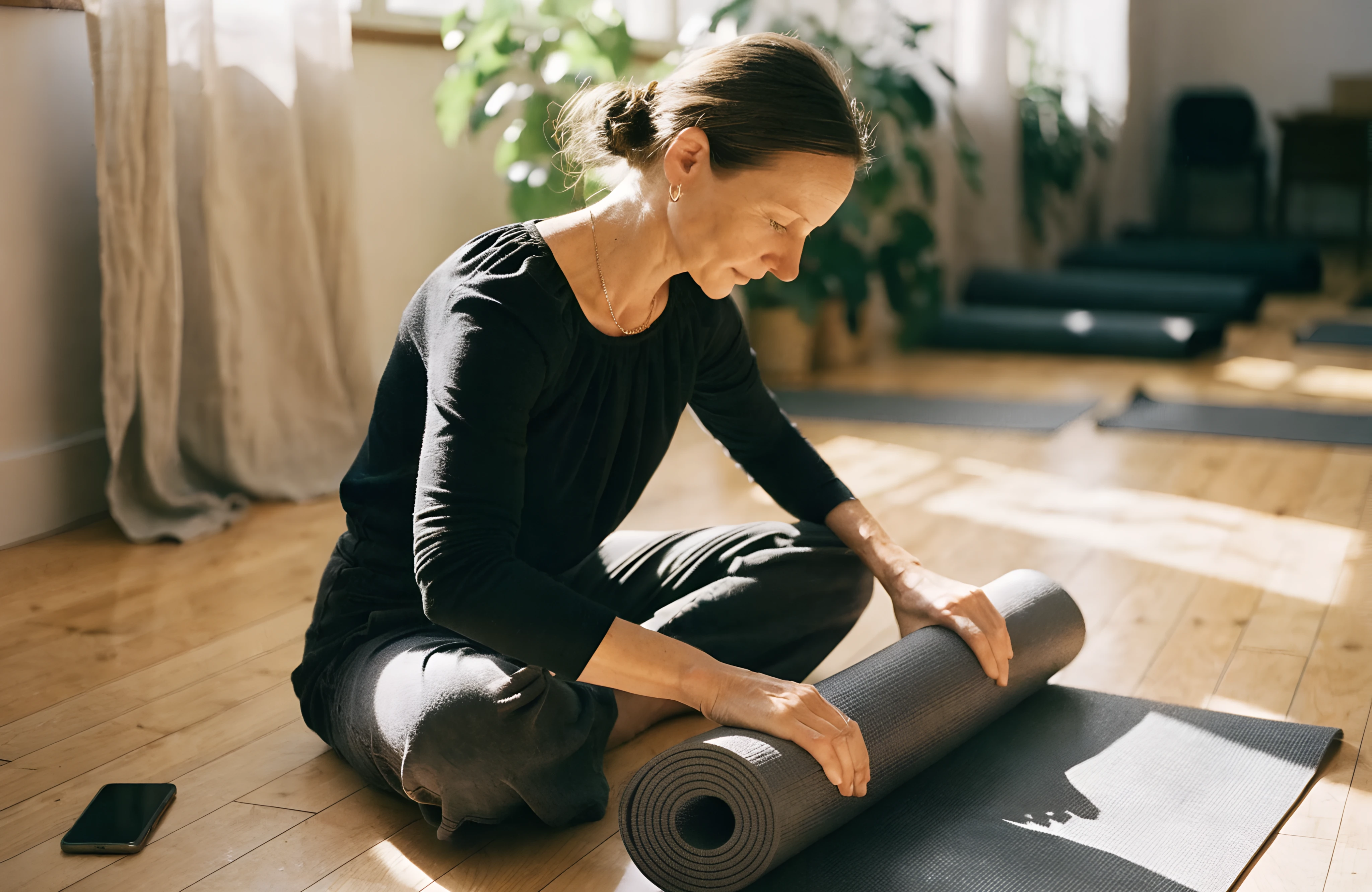
ONE SITE. ZERO ALGORITHMS.
The best way to get clients without social media is to give people one place you own that explains what you do, proves you're good at it and makes it easy to book you: a proper website. Social media can still send people your way, but your website does the closing, even on the weeks you don't post. You keep Instagram as a traffic source, not the whole shop.
If you've been posting every day just to stay visible, this one's for you.
Does it feel like your business disappears when you stop posting?
You know the drill. Monday, you post a Reel. Tuesday, a carousel. Wednesday, stories of your coffee and your "behind the scenes." Thursday, you're on a job all day and forget. Friday, you notice the enquiries have gone quiet.
One bad week and the enquiries dry up.
It's exhausting. You started a business to do the work you're good at, not to become a part-time content creator.
And when someone does find you on Instagram and wants to know more? You send them to your bio. Which sends them to a link-in-bio page. Which has six buttons, one of which is a Google Form from 2021. Then you hope for the best.
If that sounds familiar, you're not doing anything wrong. You're doing what everyone told you to do. It's just not a complete plan.
Why can't you get clients without social media right now?
Short answer: because social media is currently doing a job it was never designed to do.
Instagram is brilliant at one thing: getting eyes on you. It is not built to be your storefront, your sales page, your booking system or your proof of credibility. When it's the only thing you have, a few problems show up.
You're renting, not owning. Your account and your reach live on someone else's platform, and the rules change without warning. You don't get a vote.
The algorithm rewards volume, not quality. Your work might be fantastic, but the feed rewards whoever posts most often. That's a race a busy one-person business will lose.
It's hard to explain what you actually do. A grid of photos shows vibes. It rarely answers the questions a buyer has: what's included, who it's for, how much it roughly costs, how the process works and how to get started.
People who don't use Instagram can't find you. Plenty of your ideal clients aren't on it, or only lurk. When they want a bookkeeper, a landscaper or a coach, they Google it. Or they ask ChatGPT. If you've only got a social profile, you're barely in that conversation.
The issue isn't you. It's that social is being asked to do everything.
Do I need a website if I have Instagram?
Yes, if you want clients to find you, trust you and book you without you having to post daily.
Instagram is the shop window on a busy street. Your website is the shop itself, where people come in, get their questions answered and buy.
A window with no shop behind it is just a nice picture.
People see you somewhere, then check you out, usually on their phone, late at night. If what they find is a scattered feed and a crowded link-in-bio page, a lot of them quietly move on.
We wrote about this more broadly in why your service-based business needs one website that actually works, but the short version is: social starts the conversation, your website finishes it.
Social media vs website: what's the difference for a small business?
They do different jobs. Here's how the two usually stack up for a service business.
Reach.
Social wins for discovery among people who already follow you or similar accounts. A website wins for being found by strangers searching on Google or asking an AI assistant.
Ownership.
Social is rented land: the platform owns the rules. A website is yours: your domain, your content, your call.
Shelf life.
A social post fades within days. A good website page keeps working for years.
Conversion.
Social relies on DMs and "link in bio." A website gives people one clear next step, like a booking button or a simple enquiry form.
The smart play isn't choosing one. It's giving each one the right job.
What's better, a link in bio or a website?
A link-in-bio tool is a signpost. A website is a destination.
Link-in-bio pages are handy when you have nothing else. But they have real limits:
- They don't explain who you are or what you do in any depth
- They offer almost nothing for Google or AI search to understand and show
- They split attention across lots of buttons, so people click nothing
- They live on someone else's domain, not yours
The best setup is simple. Put your website link in your bio. One link. One destination. One clear next step. No more sending people to your Instagram bio and hoping for the best.
What is relying on Instagram actually costing you?
Your time. Add up the hours you spend planning, shooting, editing, writing captions and replying to comments every week. Now picture putting even half of that back into client work, or your weekends.
Leads you never see. Someone gets referred to you, looks you up, finds only an Instagram account with a few recent posts and no clear way to book. They go with the person who had a proper website. You never hear about it. That's the sneaky part: the cost is invisible.
Credibility. Fair or not, many buyers see "Instagram only" as "side hustle." For higher-value services like bookkeeping, consulting, renovations or interior design, a professional site signals that you're established and safe to hire.
Google and AI visibility. When people search for your type of service in your area, a social profile rarely shows up the way a website can. If you've Googled your own business and couldn't find it, that's a big part of why. We break that down in why your business isn't showing up on Google. And if you have a site but nobody reaches out, see why your website isn't getting enquiries.
Your peace of mind. If your account got hacked or locked tomorrow, what would you have left?
How do you get clients without social media?
You build a system that doesn't need you to perform every day. For most service businesses, that looks like this:
1. Own one clear home base. A website that says what you do, who it's for, why you're the right choice and how to book. This is the thing everything else points to.
2. Get found where people are searching. Get your website basics right (page titles, descriptions, clear headings, mobile-friendly design) so Google and AI search tools can understand you.
3. Make referrals land. Referred people check you out before they call. Make that check a no-brainer.
4. Collect proof in one place. Testimonials and photos of real work stay visible on a website instead of sinking in a feed.
5. Make the next step obvious. One primary call to action. Book a call, request a quote, check availability. Not six options. One.
6. Keep social as a traffic source. Post when you want to, not because you're scared of vanishing. Every post, story and profile points to one place: your website.
That's what it looks like to own your audience. Social brings people in. The website turns them into clients.
What should my first website include?
You don't need 12 pages and a blog to start. For most founder-led businesses, a well-built single page covers it. Here's a quick checklist:
- A clear headline that says what you do and who for, in plain words
- A short line on the problem you solve and the result people get
- Your services, with enough detail that people can self-qualify
- Proof: testimonials, reviews, photos of real work
- A simple "how it works" section so the process feels safe
- Answers to common questions (price range, service area, timelines)
- One obvious call to action, repeated a few times down the page
- Fast loading and great on mobile, since most people will see it on their phone
For the fast route, how to get a custom website built fast walks through your options.
Why not just build the website yourself?
You can. Some people do and it works. But be honest about the trade-off.
DIY builders promise "live in an afternoon," then eat your weekends. Canva can feel like a rabbit hole. Fiverr can be a gamble. Agencies can quote $10k and three months. AI tools can get you a website, just not quite your website.
Here's how the main options compare for a founder-led business:
DIY.
Live "if you find the time." Costs your time and sanity. Templates only. Copy and hosting are all on you. No refund on lost time.
Freelancer.
Usually 4 to 12 weeks and $3k to $8k upfront. Custom design depends on who you hire. Copy and hosting rarely included. A guarantee, rarely.
Agency.
Often 3 to 6+ months and $10k to $30k+ upfront. Custom, yes. Copy and hosting almost always extra. A guarantee, rarely.
ProjectOne.
Live in about 14 working days. $100 USD/month. Always custom. Copy and hosting included. 100% money back if you don't love the design direction.
For a deeper dive, see our freelancer vs agency vs DIY comparison.
How does ProjectOne help you get clients without Instagram?
ProjectOne is a productized website service from KHULA Studio, an award-winning design studio founded by Jamie Windell. We build custom one-page websites for founder-led, service-based businesses whose work is great but whose online presence doesn't show it yet.
Here's how it works:
ONE plan. The 24 plan is $100 USD a month for 24 months. No big upfront lump sum. Hosting is included the whole time. See the details on our pricing section.
Copy written for you. You fill in an onboarding form. AI helps draft copy using the StoryBrand framework, then a senior copywriter edits and refines it so it sounds like you. The design is 100% human-made.
Fully custom, built in Framer. Never a retrofitted template. Framer is design-first, fast and easy to update.
SEO and AEO fundamentals built in. Page titles, meta descriptions, schema, llms.txt and a mobile-friendly build, so Google and AI search tools can actually understand what you do.
A two-week sprint. About 14 working days: Onboarding, We Build, First Look, Revisions, Framer Development, Launch. You get one focused revision round, with 2 to 3 days to send all your feedback at once.
A real guarantee. The First Look is your checkpoint. If you're not happy with the design direction, you get a full 100% refund. No questions, no hard feelings.
Help after launch. Add Framer Care+ for $30 USD a month and we'll handle updates to text and images, add new sections, reply within 24 hours and run a monthly site health check.
Your site, your call at the end. After 24 months, take ownership and we'll transfer the site to your Framer account (it takes about five minutes, then Framer hosting is around $10 USD a month billed annually). Or renew and we'll redesign and build it from scratch.
And every site does a bit of good: $100 from every launch goes to Hungry For Life, a 100% model charity funding clean water, food and shelter.
The result? One link in your bio that actually does the selling. One less thing on your plate.
FAQs
Is Instagram enough for a small business?
For discovery, it can help. As your only home base, usually not. Instagram is rented, posts fade fast and it rarely explains your offer clearly. Most service businesses do better with a website as the hub and Instagram as one of the ways people find it. That way a quiet week online doesn't mean a quiet week for bookings.
Can people find my business on Google without a website?
Partly. A Google Business Profile can show you in local results and maps, but it gives limited room to explain your services, show proof or answer questions. A website with proper page titles, headings and schema gives Google and AI tools much more to work with, which helps you appear for more searches.
What's better, a link in bio or a website?
A website. A link-in-bio page is a signpost with a few buttons; a website is a destination that explains what you do, shows proof and gives one clear next step. It also sits on your own domain and can rank in search. Put your website link in your bio and let it do the selling.
What should my first website include?
A clear headline saying what you do and who for, your services, proof like testimonials and photos, a simple process section, a short bit about you, answers to common questions and one obvious call to action. It should load fast and look great on mobile. For most service businesses, one well-built page covers everything.
Who is ProjectOne a good fit for?
Founder-led, service-based businesses of about one to five people whose online presence doesn't reflect the quality of their work. Think coaches, trades, wellness practitioners, creatives, real estate and finance professionals, legal advisors, marketing freelancers and local businesses. If you want a custom site without an agency price tag or timeline, it's likely a fit.
Is it really monthly, or do I pay anything upfront?
It's truly monthly. You pay equal instalments over the term, hosting is included, and there's no lump sum or upfront charge. At the end of the plan you can refresh your site and keep going, or take ownership of it and pay Framer for hosting directly. Simple, predictable and easy to budget for.
What's the guarantee?
If you're not happy with the design direction at the First Look stage, you get a full 100% refund. No questions, no hard feelings. It's there so you can say yes without worrying you'll be stuck with something you don't love. We'd rather you walk away happy than stay unhappy.
Ready to stop posting just to stay visible?
You don't have to quit Instagram. You just have to stop letting it carry the whole business. Give it a proper place to send people, and let your website quietly turn followers, referrals and Google searches into real enquiries.
We're a small team based in Chilliwack, BC, Canada, and we build websites for founders right across the United States, the United Kingdom, Australia, New Zealand and Canada.
When you're ready, take a look at how it works and pick a sprint date that suits you. No pressure, no hard sell. If you're ready to get clients without social media doing all the heavy lifting, we'd love to build it with you.
✅ 100% Money-Back Guarantee.
One site. One link in your bio. One less thing to post about.
one plan. one site. done right
Your Site Won’t Build Itself. Good Thing We Will.
Ready for a design partner that makes it simple?
